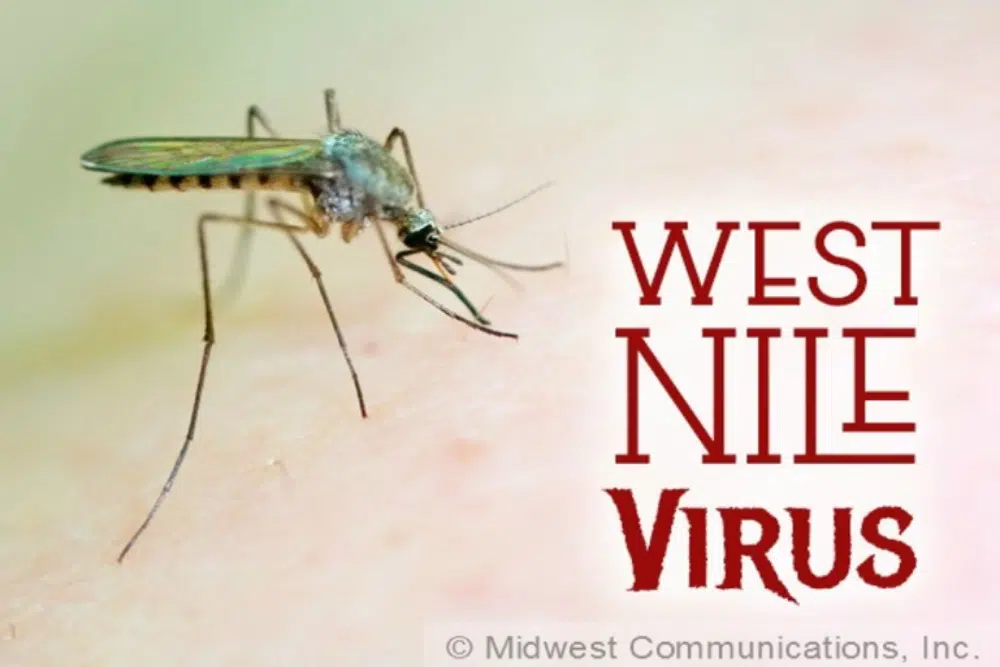
PEORIA COUNTY, Ill. – The Peoria City/County Health Department is reporting the first West Nile virus positive mosquito sample found in Peoria County this year.
The positive sample is an indication that West Nile virus is circulating in our area and people should take appropriate preventive measures to protect themselves.
“West Nile virus (WNV) is transmitted through the bite of a mosquito that has picked up the virus by feeding on an infected bird,” Environmental Health Director Carey Panier said. “The Health Department has been setting mosquito traps throughout Peoria County to watch for areas of breeding and then testing those mosquitoes for WNV.”
Panier adds, “The best way to prevent West Nile disease or any other mosquito-borne illness is to reduce the number of mosquitoes around your home and to take personal precautions to avoid mosquito bites. Precautions include practicing the three “R’s” – reduce, repel and report.”
- REDUCE exposure – Avoid being outdoors when mosquitoes are most active, especially
between dusk and dawn. Make sure doors and windows have tight-fitting screens. Repair or
replace screens that have tears or other openings. Try to keep doors and windows shut,
especially at night. Eliminate all sources of standing water where mosquitoes can breed,
including water in bird baths, ponds, flowerpots, wading pools, old tires and any other receptacles.
- REPEL mosquitoes – When outdoors, wear shoes and socks, long pants and a long-sleeved
shirt, and apply insect repellent that contains DEET, picaridin, oil of lemon eucalyptus or IR
3535, according to label instructions. Consult a physician before using repellents on infants.
- REPORT mosquito breeding grounds – In communities where there are organized mosquito
control programs, contact your municipal government to report areas of stagnant water in
roadside ditches, flooded yards and similar locations that may produce mosquitoes.
Common WNV symptoms include fever, nausea, headache and muscle aches. Symptoms may last from a few days to a few weeks. However, four out of five people infected with West Nile virus will not show any symptoms.
In rare cases, severe illness including meningitis or encephalitis, or even death, can occur. People older than 50 are at higher risk for severe illness from WNV.




Comments