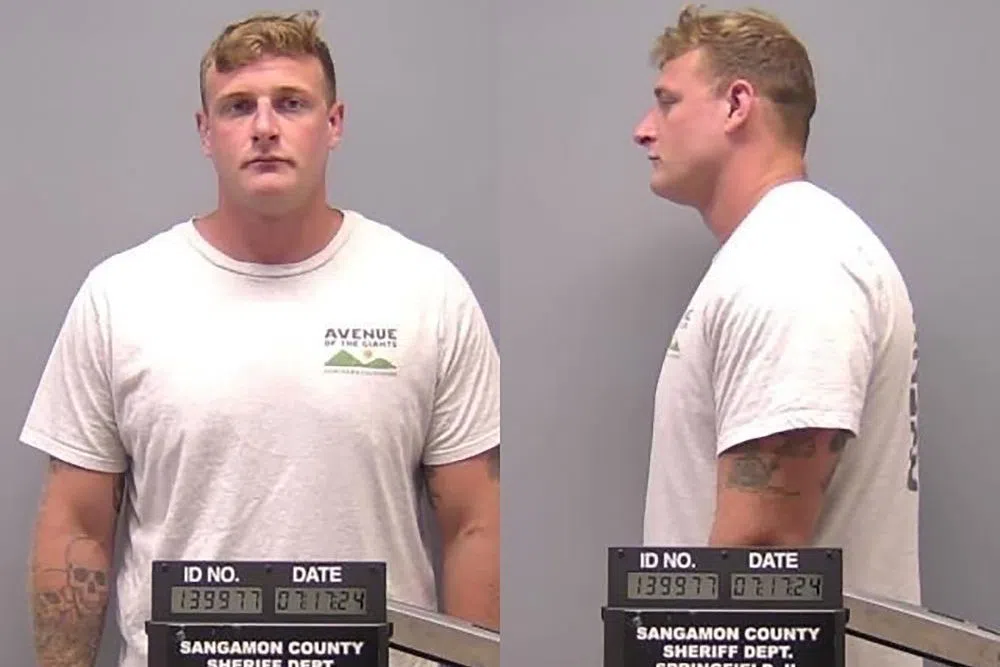
The Illinois Supreme Court has dismissed an appeal in the Sean Grayson murder case, ruling the legal question became moot after his conviction.
In an opinion filed Wednesday, the state’s highest court vacated lower court rulings on whether Grayson should have been held without bail before his trial.
Grayson, a former Sangamon County sheriff’s deputy, was indicted in July 2024 on three counts of first-degree murder, one count of aggravated battery with a firearm, and one count of official misconduct for causing the death of Sonya Massey.
The state filed a petition to deny Grayson pretrial release on the grounds of dangerousness. On July 18, 2024, a Sangamon County circuit court judge granted the petition and detained Grayson, finding clear and convincing evidence he should be held without bail.
The appellate court disagreed and reversed the circuit court’s decision. The state then appealed to the Illinois Supreme Court, arguing it had presented clear and convincing evidence that Grayson was ineligible for pretrial release.
However, while the appeal was pending, Grayson’s case went to trial and a jury found him guilty of second-degree murder.
“Because Grayson’s case went to trial and a jury found him guilty of second degree murder, we find that the detention question presented in this appeal has become moot,” the Supreme Court wrote .
The court explained that an appeal becomes moot if “no actual controversy exists or if events have occurred that make it impossible for the reviewing court to grant the complaining party effectual relief.”
“When an appeal is rendered moot and we do not reach the merits of the appeal, we cannot speak to the correctness of the judgments rendered by the circuit and appellate courts,” the opinion stated.
To prevent the lower courts’ rulings from standing as precedent for future cases, the Supreme Court vacated both the appellate court’s judgment and the circuit court’s judgment on the pretrial detention issue.
The Supreme Court’s action only addresses the pretrial detention appeal and does not affect Grayson’s second-degree murder conviction.
Grayson shot and killed Massey in her home on July 6, 2024, after she called 911 to report a prowler. The case drew national attention and sparked discussions about police conduct and the treatment of individuals experiencing mental health crises.




Comments