Illinois coroners are sounding the alarm about the right-to-die legislation sitting on Governor JB Pritzker’s desk, saying they were completely shut out of the process and warning the bill could cause serious problems.
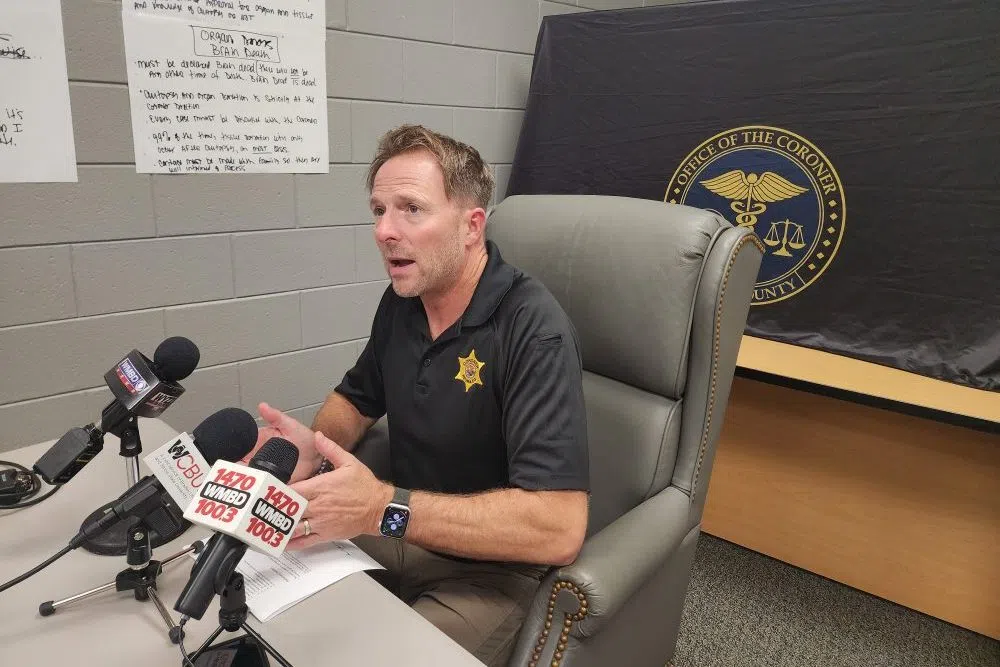
Peoria County Coroner Jamie Harwood told WMBD’s Phil Luciano Show that when about 60 coroners gathered this week in Bloomington-Normal, every single one of them had major concerns about the legislation known as “Deb’s Law.”
“There wasn’t one person in the room who didn’t have hesitation about this bill,” Harwood said.
Deb’s Law would let terminally ill adults, with six months or less to live, get a prescription to end their lives, as long as they’re mentally capable of making that decision.
The bill barely squeaked through the Illinois Senate by just one vote and now sits on the governor’s desk.
Harwood laid out several problems with how the bill is written:
- Nobody asked the coroners. Not a single coroner or forensic pathologist in the state was consulted when lawmakers wrote this bill.
- Coroners would be cut out completely. The law removes coroners from investigating these deaths, even though they’re legally required to investigate all deaths.
- Death certificates wouldn’t tell the whole story. Doctors would list the terminal illness as the cause of death, not how the person actually died. These deaths would be labeled “natural,” which Harwood says “just simply isn’t true.”
- The data gets messed up. When death certificates don’t accurately reflect what happened, it throws off public health tracking and makes it harder to understand what’s really going on in communities.
- No independent oversight. Without coroner involvement, there’s no outside check to make sure everything was done properly.
“Don’t you want a third party to make sure everything was on the up and up when it happened? Of course. That’s what we’re in it for,” Harwood said.
Harwood made clear his concerns aren’t about opposing the idea of right-to-die laws. He gets it on a personal level.
“I watched my dad drop dead from lung cancer in my living room, I get it. I am as empathetic as anybody can be,” he said.
But as a coroner who handles eight to 10 deaths every day, he sees problems with how this would actually work.
“Do we uphold justice, integrity, honesty, responsibility, or do we just let the doctor do whatever the doctor is gonna do? I have an ethical dilemma with that,” Harwood said.
Harwood also worries about what this means for families.
“Not everybody is going to be psychologically sound, particularly the family members, to perform this act in their own home,” he said. “There is a psychological impact following this that is an unknown variable right now.”
So how did a bill this significant slip past the coroners?
“Our lobbyist in the Coroners Association, the bill skimmed by. He wasn’t aware of the language in the bill, so it wasn’t brought to our attention until it was sitting on the governor’s desk,” Harwood explained.
By then, coroners were left asking, “What are we gonna do now?”
After Monday’s meeting, Harwood wrote up template language for coroners statewide to send letters and make calls to the governor and their representatives.
“We’re open to talking about it, 100%. We’re open to talking about it,” said Harwood, who formerly led the Illinois Coroners Association.
He’s also reached out to State Representative Jehan Gordon-Booth, hoping she can get the coroners’ message to the governor.
Reports suggest Governor Pritzker himself was surprised to find this bill on his desk, which tells Harwood that lawmakers didn’t have all the information they needed.
The governor can sign it, veto it, or use what’s called an amendatory veto to make changes.
“We’re open to an amendatory veto or a veto altogether, and then bring us back into the picture,” Harwood said. “We’re not 100% opposed to it as a group. We just want to be part of it and help write that language so it’s better for the residents of Illinois.”
The law would affect all 101 county coroners in Illinois and the Cook County Medical Examiner.
Listen to the Phil Luciano Show’s interview here:




Comments