Dec 5 (Reuters) – A U.S. appeals court on Friday said President Donald Trump had the power to fire Democratic members of two federal labor boards, a major victory in the Republican president’s bid to rein in agencies meant to be independent from the White House.
The U.S. Court of Appeals for the District of Columbia Circuit in a 2-1 decision said federal laws allowing members of the National Labor Relations Board and Merit Systems Protection Board to be removed only for cause violated the U.S. Constitution.
Those agencies wield substantial executive power, so they should be accountable to the president, Circuit Judge Gregory Katsas, a Trump appointee, wrote for the court. He was joined by another Trump appointee, Circuit Judge Justin Walker.
Circuit Judge Michelle Pan, in a dissenting opinion, said that Congress intended to insulate the boards from politics by making them independent from the White House, as it has done with about 30 other agencies.
“Under my colleagues’ reasoning, it appears that no independent agencies may lawfully exist in this country,” wrote Pan, an appointee of Democratic former President Joe Biden.
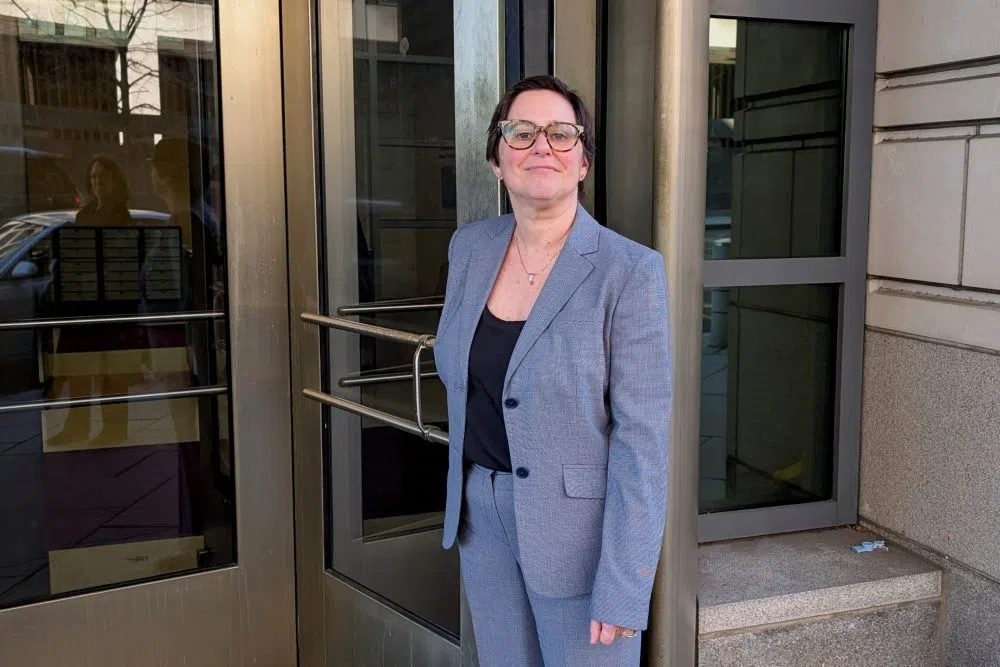
The D.C. Circuit reversed separate rulings by two judges that had reinstated Cathy Harris to the merit board and Gwynne Wilcox to the NLRB. The Supreme Court in May temporarily paused the lower court rulings.
The White House and lawyers for Wilcox and Harris did not immediately respond to requests for comment.
The NLRB hears private-sector labor disputes and the merit board decides appeals by federal employees who have been disciplined or fired. Because the merit board is often the only legal recourse for federal workers, it could have a key role in reviewing Trump’s efforts to purge the federal workforce.
Members of both agencies are appointed by the president, but federal laws allow them to be removed only for cause including inefficiency, neglect of duty or malfeasance.
Trump fired Harris and Wilcox without such cause in January, the first time a president had removed a member of either agency. He has removed many other officials who would typically keep their jobs in a new administration, including members of other boards and inspectors general who police individual agencies for waste and corruption.
The Supreme Court is scheduled to hear arguments on Monday over whether Trump had the power to fire a member of the Federal Trade Commission, and its decision could set important precedent on the president’s ability to remove members from a range of federal agencies. The Supreme Court upheld removal protections for FTC members in a 1935 ruling, which Harris and Wilcox claimed also applied to their cases.
The D.C. Circuit on Friday disagreed, saying the labor boards are structured differently than the trade commission and have more powers.
The removal of Harris and Wilcox paralyzed both labor boards, which already had vacant seats, by depriving them of enough members to decide individual cases. The U.S. Senate in October confirmed a Trump nominee to the merit board, restoring a quorum of two members. A pair of nominees for NLRB seats are awaiting confirmation votes.
The issue is being watched closely by legal experts, as striking down removal protections could give Trump more direct control over regulation of areas including trade, energy, antitrust enforcement, finance, and consumer product safety.
(Reporting by Daniel Wiessner in Albany, New York, Editing by Alexia Garamfalvi, Matthew Lewis, Peter Graff)




Comments