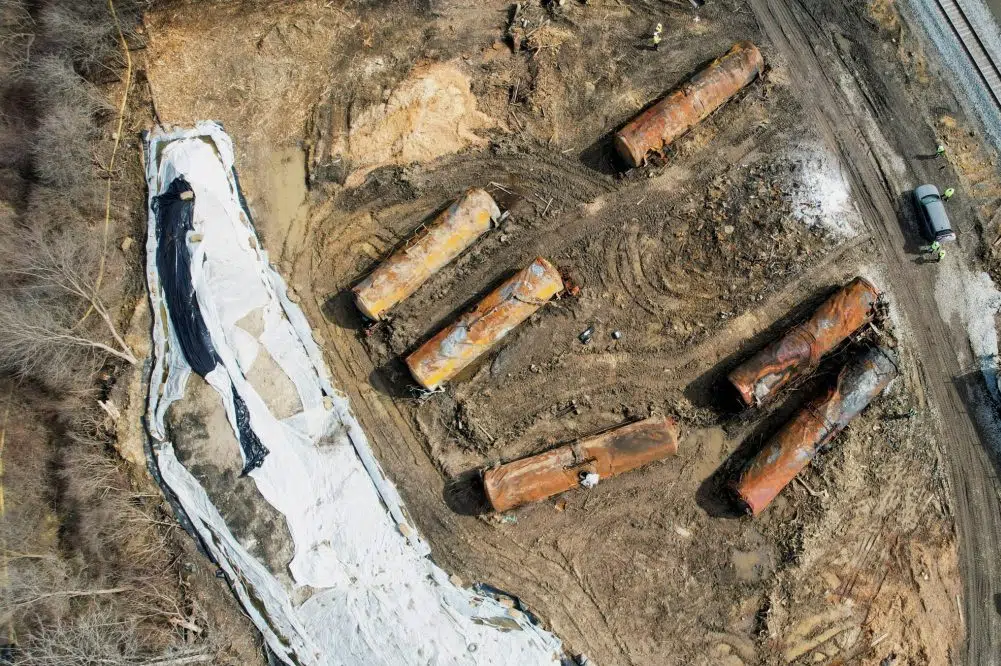
WASHINGTON (Reuters) -The investigation into the Ohio train derailment that spilled toxic chemicals last month has found signs that aluminum parts on three tank cars may have caused pressure relief devices not to function properly, the National Transportation Safety Board (NTSB) said on Thursday.
The Feb. 3 derailment of a Norfolk Southern-operated train in East Palestine, Ohio caused cars carrying vinyl chloride to spill and catch fire. Railroad crews also drained and burned off toxic chemicals. This sent a cloud of smoke over the town, forcing thousands of residents to evacuate.
The NTSB said on Thursday its preliminary examination suggested aluminum covers on protective housing for pressure relief devices on three cars melted. This could have caused the devices not to perform as intended.
The pressure relief devices seek to regulate internal pressure of the tank cars in a fire to minimize the risk of a breach and chemical spill.
Since the derailment, some of the town’s 4,700 residents have reported ailments such as rashes and breathing difficulties and fear long-term health consequences.
Three of the derailed vinyl chloride tank cars were manufactured in the 1990s with aluminum protective housing covers, the NTSB said.
Last month, NTSB chair Jennifer Homendy said the derailment might have been avoided if the railway company’s alarm system had given engineers an earlier warning that bearings were overheating.
The incident has prompted calls in Congress to pass new railroad safety legislation and Transportation Secretary Pete Buttigieg has vowed to impose new regulations. Norfolk Southern CEO Alan Shaw will testify next week before a Senate committee on the derailment.
(Reporting by David Shepardson and Eric Beech; Editing by Cynthia Osterman)




Comments