UPDATED 1:22 P.M.
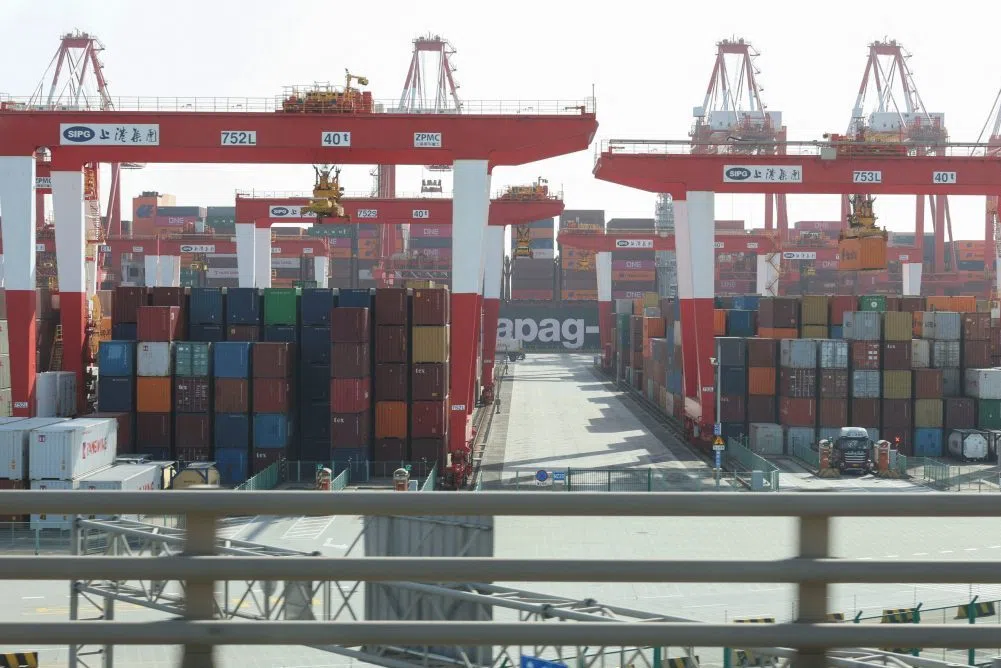
WASHINGTON/BEIJING (Reuters) -The United States said on Tuesday that 104% duties on imports from China will take effect shortly after midnight, even as the Trump administration moved to quickly start talks with other trading partners targeted by President Donald Trump’s sweeping tariff plan.
U.S. stocks retreated on the news. Global markets had previously posted gains on hopes that Trump might be willing to negotiate down the array of country and product-specific trade barriers he is erecting around the world’s largest consumer market.
The administration has scheduled talks with South Korea and Japan, two close allies and major trading partners, and Italian Prime Minister Giorgia Meloni is due to visit next week.
But the White House made clear that country-specific tariffs of up to 50% would nevertheless take effect at 12:01 a.m. Eastern Time (0401 GMT), as planned.
Those tariffs will be especially steep for China, as Trump has ratcheted up duties on its imports to 104% in response to counter-tariffs Beijing announced last week. China has refused to bow to what it called “blackmail” and has vowed to “fight to the end.”
Administration officials said they would not prioritize negotiations with the world’s No. 2 economic power.
Trump’s sweeping tariffs have raised fears of recession and upended a global trading order that has been in place for decades.
“Right now, we’ve received the instruction to prioritize our allies and our trading partners like Japan and Korea and others,” White House economic adviser Kevin Hassett said on Fox News.
The White House said Trump instructed his trade team to create “tailor made” deals for the nearly 70 countries that have reached out for talks.
Trump’s lead trade negotiator, Jamieson Greer, told Congress that his office is trying to work quickly but is not facing a particular deadline.
“The president has been clear, again, that he’s not doing exemptions or exceptions in the near term,” Greer told lawmakers.
China is bracing for a war of attrition, and manufacturers are warning about profits and scrambling to plan new overseas plants. Citing rising external risks, Citi cut its 2025 China GDP growth forecast to 4.2% from 4.7%.
Three out of four Americans expect prices to rise as Trump’s tariffs kick in, according to a Reuters/Ipsos poll.
Chipmaker Micron told customers it will impose a tariff-related surcharge starting on Wednesday, while U.S. clothing retailers said they are delaying orders and holding off on hiring. Running shoes made in Vietnam that now retail for $155 will cost $220 when Trump’s 46% tariff on that country takes effect, according to an industry group.
Consumers are stocking up while they can. “I’m buying double of whatever – beans, canned goods, flour, you name it,” Thomas Jennings, 53, said as he pushed a shopping cart through the aisles of a New Jersey Walmart.
Stock markets found a firmer footing on Tuesday after a gut-wrenching few days for investors which prompted some business leaders, including those close to Trump, to urge the president to reverse course.
European shares bounced off 14-month lows after four straight sessions of heavy selling, while global oil prices steadied after falling to four-year lows.
Wall Street’s main indexes had posted gains earlier in the day, but fell after the White House said the tariffs on China would take effect.
EUROPE EYES COUNTER-MEASURES
The European Commission, meanwhile, is mulling counter-tariffs of 25% on a range of U.S. goods including soybeans, nuts and sausages, though other potential items like bourbon whiskey were left off the list. Officials said they stood ready to negotiate.
The 27-member bloc is struggling with tariffs on autos and metals already in place, and faces a 20% tariff on other products on Wednesday. Trump has also threatened to impose tariffs on EU alcoholic drinks.
European pharma companies, also fearful of the tariff fallout, warned the president of the European Commission, Ursula von der Leyen, in a meeting that Trump’s tariffs would expedite the industry’s shift away from Europe and towards the United States.
(Reporting by Reuters newsrooms; Writing by Andy Sullivan, Matthias Williams and John Geddie; Editing by Nick Zieminski, Lincoln Feast, Hugh Lawson and Marguerita Choy)
———————————
WASHINGTON/BEIJING (Reuters) -U.S. President Donald Trump said on Tuesday he is waiting to hear from China before duties of more than 100% take effect, in a sign that he might be open to last-minute negotiations with the world’s No. 2 economic power.
Global markets steadied after days of carnage prompted by Trump’s sweeping levies, which have raised fears of recession and upended a global trading order that has been in place for decades. U.S. stock indexes opened sharply higher after a bruising selloff that has wiped out trillions of dollars since last week.
Trump has already implemented a 10% tariff on almost all imports to the world’s largest consumer market, and targeted tariffs of up to 50% on many trading partners are due to take effect on Wednesday.
China has refused to bow to what it called “blackmail” and vowed to “fight to the end” after Trump threatened to ratchet up tariffs to 104% in response to China’s decision to match “reciprocal” duties Trump announced last week.
Trump indicated that a resolution might be possible.
“China also wants to make a deal, badly, but they don’t know how to get it started. We are waiting for their call. It will happen!” he said on social media.
Dozens of countries are offering concessions to head off the tariffs. Trump’s administration says it has set up talks with several so far, including Japan and South Korea.
China is bracing for a war of attrition, and manufacturers of goods from tableware to flooring are warning about profits, and scrambling to plan new overseas plants. Citing rising external risks, Citi cut its 2025 China GDP growth forecast to 4.2% from 4.7%.
Some companies are warning they will hike prices.
Chipmaker Micron told customers it will impose a tariff-related surcharge starting Wednesday, while U.S. clothing retailers said they are delaying orders and holding off on hiring. Running shoes made in Vietnam that now retail for $155 will cost $220 when Trump’s 46% tariff on that country takes effect, according to an industry group.
Consumers are stocking up while they can. “I’m buying double of whatever – beans, canned goods, flour, you name it,” Thomas Jennings, 53, said as he pushed a shopping cart through the aisles of a New Jersey Walmart.
As the world’s two biggest economies traded blows, China’s Foreign Ministry criticized as “ignorant and impolite” comments made by Vice President JD Vance in a recent Fox News interview.
While defending Trump’s tariffs, Vance criticized the U.S. economic model as harming its own workers: “We borrow money from Chinese peasants to buy the things those Chinese peasants manufacture.”
Vietnam has requested a 45-day delay while Indonesia announced concessions for U.S. imports including reducing taxes on electronic goods and steel.
Stock markets found a firmer footing on Tuesday after a gut-wrenching few days for investors which prompted some business leaders, including those close to Trump, to urge the president to reverse course.
European shares bounced off 14-month lows after four straight sessions of heavy selling, while global oil prices steadied after falling to four-year lows.
Wall Street’s main indexes bounced back from a heavy selloff, led by technology stocks.
EUROPE EYES COUNTER-MEASURES
The European Commission, meanwhile, is mulling counter-tariffs of 25% on a range of U.S. goods including soybeans, nuts and sausages, though other potential items like bourbon whiskey were left off the list. Officials said they stood ready to negotiate.
The 27-member bloc is struggling with tariffs on autos and metals already in place, and faces a 20% tariff on other products on Wednesday. Trump has also threatened to impose tariffs on EU alcoholic drinks.
European pharma companies, also fearful of the tariff fallout, warned von der Leyen in a meeting that Trump’s tariffs would expedite the industry’s shift away from Europe and towards the United States.
(Reporting by Reuters newsrooms; Writing by John Geddie and Matthias Williams; Editing by Lincoln Feast and Hugh Lawson)



Comments