UPDATED 9:11 A.M.
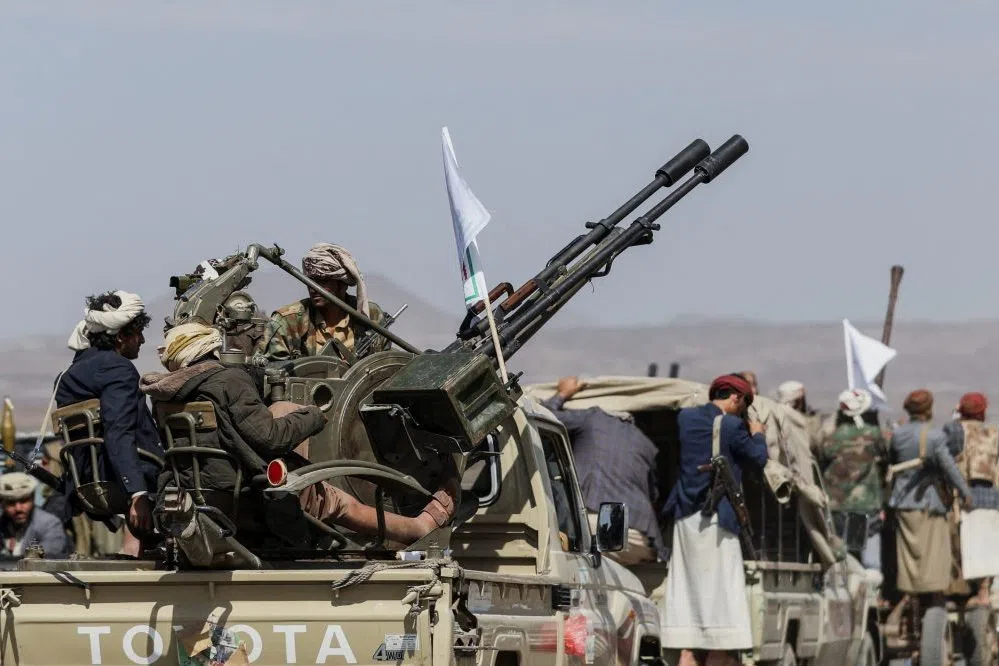
WASHINGTON/ADEN/BAGHDAD (Reuters) – The United States and Britain launched strikes against 36 Houthi targets in Yemen, in the second day of major U.S. operations against Iran-linked groups following a deadly attack on American troops last weekend.
The strikes late on Saturday hit buried weapons storage facilities, missile systems, launchers and other capabilities the Houthis have used to attack Red Sea shipping, the Pentagon said, adding it targeted 13 locations across the country.
They are the latest blows in a conflict that has spread into the Middle East since Oct. 7, when the Palestinian militant group Hamas stormed Israel from the Gaza Strip, igniting a war that has drawn Tehran-backed groups into attacks on U.S. and Israeli targets on several fronts.
The Houthi military spokesperson Yahya Sarea said the strikes “will not pass without a response and consequences.”
“The building I live in shook,” said Fatimah, a resident of Houthi-controlled Sanaa, adding that it had been years since she had felt such blasts in a country that has suffered years of war.
The Houthis did not announce any casualties.
The Yemen strikes are running parallel to an unfolding U.S. campaign of retaliation over the killing of three American soldiers in a drone strike by Iran-backed militants on an outpost in Jordan a week ago.
On Friday, the U.S. carried out the first wave of that retaliation, striking in Iraq and Syria more than 85 targets linked to Iran’s Islamic Revolutionary Guard Corps (IRGC) and militias it backs, reportedly killing nearly 40.
The violence has added to concerns of the potential for further escalation. Iran, a supporter of Hamas, has so far avoided any direct role in the conflict, even as groups it backs have entered the fray from Syria, Iraq, Yemen and Lebanon.
Mahjoob Zweiri, Director of the Gulf Studies Center at Qatar University, did not expect a change in Iran’s approach even after the latest U.S. strikes.
“They keep the enemy behind the borders, far away. They are not interested in any direct military confrontation which might lead to attacks on their cities or their homeland. They will maintain that status quo,” he told Reuters.
Iran’s foreign ministry said the latest attacks on Yemen were “a flagrant violation of international law by the United States and Britain”, warning the continuation of such attacks was a “worrying threat to international peace and security”.
The Pentagon has said it does not want war with Iran and does not believe Tehran wants war either. U.S. Republicans have been putting pressure on President Joe Biden, a Democrat, to deal a blow to Iran directly.
HOUTHIS SAY WON’T BE DETERRED
The Houthis, who control swathes of Yemen, say their attacks are in solidarity with Palestinians as Israel strikes Gaza. The U.S. and its allies characterize them as indiscriminate and a menace to global trade.
Major shipping lines have largely abandoned Red Sea shipping lanes for longer routes around Africa. This has increased costs, feeding worries about global inflation while denying Egypt crucial foreign revenue from use of the Suez Canal.
The U.S. has carried out more than a dozen strikes against Houthi targets in the past several weeks.
Sarea, the Houthi spokesperson, suggested in a statement on social media that the group would press on.
“These attacks will not deter us from our ethical, religious and humanitarian stance in support of the resilient Palestinian people in the Gaza Strip,” Sarea said.
Just hours before the latest major wave of strikes from the sea and air, the U.S. military’s Central Command detailed other, more limited strikes in the past day that included hitting six cruise missiles the Houthis were preparing to launch against ships in the Red Sea.
Around 4 a.m. in Yemen (0100 GMT) on Sunday, the U.S. military also struck a Houthi anti-ship cruise missile poised to launch.
BAGHDAD FUNERAL
British Defence Minister Grant Shapps said this was “not an escalation”. “We have already successfully targeted launchers and storage sites involved in Houthi attacks, and I am confident that our latest strikes have further degraded the Houthis’ capabilities,” he said.
The U.S. strikes in Iraq were the deadliest in years.
Hundreds of people attended a Baghdad funeral procession for 17 members of the Popular Mobilization Forces (PMF) killed in the strikes. The PMF is a state security force containing several Iran-backed armed groups.
Hadi al-Ameri, a senior Iraqi politician close to Iran, said it was time to oust U.S. forces, 2,500 of whom are in Iraq in a mission to help prevent a resurgence of Islamic State. “Their presence is pure evil for the Iraqi people,” he said.
Iraq and the United States last month initiated talks about ending the U.S.-led coalition’s presence in the country.
Oman Foreign Minister Badr bin Hamad bin Hamoud Al-Busaidi said that “Oman has grave concerns over the continuous escalation in the region.”
In a statement, he criticized the effectiveness of retaliatory U.S. attacks in Iraq and Syria, noting that “such actions compromise the region’s safety, stability, and efforts to tackle challenges like violence and extremism.”
(Additional reporting by Andrew Mills in Doha and Tala Ramadan in Dubai; Writing by Tom Perry; Editing by Hugh Lawson)
——————————————
WASHINGTON (Reuters) -The United States and Britain launched strikes against 36 Houthi targets in Yemen on Saturday, in the second day of major U.S. operations against Iran-linked groups following a deadly attack on American troops last weekend.
The strikes hit buried weapons storage facilities, missile systems, launchers and other capabilities the Houthis have used to attack Red Sea shipping, the Pentagon said, adding it targeted 13 locations across the country.
It was the latest sign of spreading conflict in the Middle East since war erupted between Israel and Hamas after the militant Palestinian group’s deadly assault on Israel on Oct.7.
“This collective action sends a clear message to the Houthis that they will continue to bear further consequences if they do not end their illegal attacks on international shipping and naval vessels,” U.S. Defense Secretary Lloyd Austin said.
Houthi military spokesperson Yahya Sarea said the U.S. strikes “will not pass without a response and consequences.”
The Yemen strikes are running parallel to an unfolding U.S. campaign of military retaliation over the killing of three American soldiers in a drone strike by Iran-backed militants on an outpost in Jordan.
On Friday, the U.S. carried out the first wave of that retaliation, striking in Iraq and Syria against more than 85 targets linked to Iran’s Islamic Revolutionary Guard Corps (IRGC) and militias it backs, reportedly killing nearly 40 people.
While Washington accuses Iran-backed militias of attacking U.S. troops at bases in Iraq, Syria and Jordan, Yemen’s Iran-linked Houthis have been regularly targeting commercial ships and warships in the Red Sea.
The Houthis, who control the most populous parts of Yemen, say their attacks are in solidarity with Palestinians as Israel strikes Gaza. But the U.S. and its allies characterize them as indiscriminate and a menace to global trade.
Faced with mounting Red Sea violence, major shipping lines have largely abandoned the critical trade route for longer routes around Africa. This has increased costs, feeding worries about global inflation while sapping Egypt of crucial foreign revenue from shippers sailing the Suez Canal to or from the Red Sea.
Biden’s emerging strategy on Yemen aims to weaken the Houthi militants but stops well short of trying to defeat the group or directly attack Iran, the Houthis’ main sponsor, experts say.
The strategy blends limited military strikes and sanctions, and appears aimed at punishing the Houthis while attempting to limit the risk of a broad Middle East conflict.
The U.S. has carried out more than a dozen strikes against Houthi targets in the past several weeks, but these have failed to stop attacks by the group.
Sarea, the Houthi military spokesperson, suggested in a statement on social media that the group’s intervention in the Red Sea would continue.
“These attacks will not deter us from our ethical, religious and humanitarian stance in support of the resilient Palestinian people in the Gaza Strip,” Sarea said.
Just hours before the latest major wave of strikes from the sea and air, the U.S. military’s Central Command issued statements detailing other, more limited strikes in the past day that included hitting six cruise missiles the Houthis were preparing to launch against ships in the Red Sea.
Around 4 a.m. in Yemen (0100 GMT), the U.S. military also struck a Houthi anti-ship cruise missile that was poised to launch.
“This is not an escalation,” said British Defence Minister Grant Shapps. “We have already successfully targeted launchers and storage sites involved in Houthi attacks, and I am confident that our latest strikes have further degraded the Houthis’ capabilities.”
The United States said Sunday’s strikes had support from Australia, Bahrain, Canada, Denmark, the Netherlands and New Zealand. U.S. Central Command said that beyond missile capabilities, the strikes targeted drone storage and operations sites, radars and helicopters.
Despite the strikes against Iran-linked groups, the Pentagon has said it does not want war with Iran and does not believe Tehran wants war either. U.S. Republicans have been ratcheting up pressure on President Joe Biden, a Democrat, to deal a blow to Iran directly.
It was unclear how Tehran would respond to the strikes, which do not directly target Iran but degrade groups it backs.
Iran’s foreign ministry spokesperson Nasser Kanaani said in a statement the attacks in Iraq and Syria represented “another adventurous and strategic mistake by the United States that will result only in increased tension and instability”.
Iraq summoned the U.S. charge d’affaires in Baghdad to deliver a formal protest after strikes in that country.
The Houthi military said in its statement that the United States and Britain carried out a total of 48 airstrikes on Yemen, with 13 of them in the capital Sanaa and Sanaa Governorate. Another 11 strikes were on Taiz Governorate and nine were on Hodeidah Governorate.
(Reporting by Phil Stewart and Idrees Ali; additional reporting by Mohammed Ghobari in Aden, Hatem Maher and Ahmed Tolba in Cairo and Akanksha Khushi in Bengaluru; Editing by Jonathan Oatis, David Gregorio and William Mallard)




Comments